
Blog
-
FOSDEM 2027 – The M-Ecosystem Devroom: Call for Participation
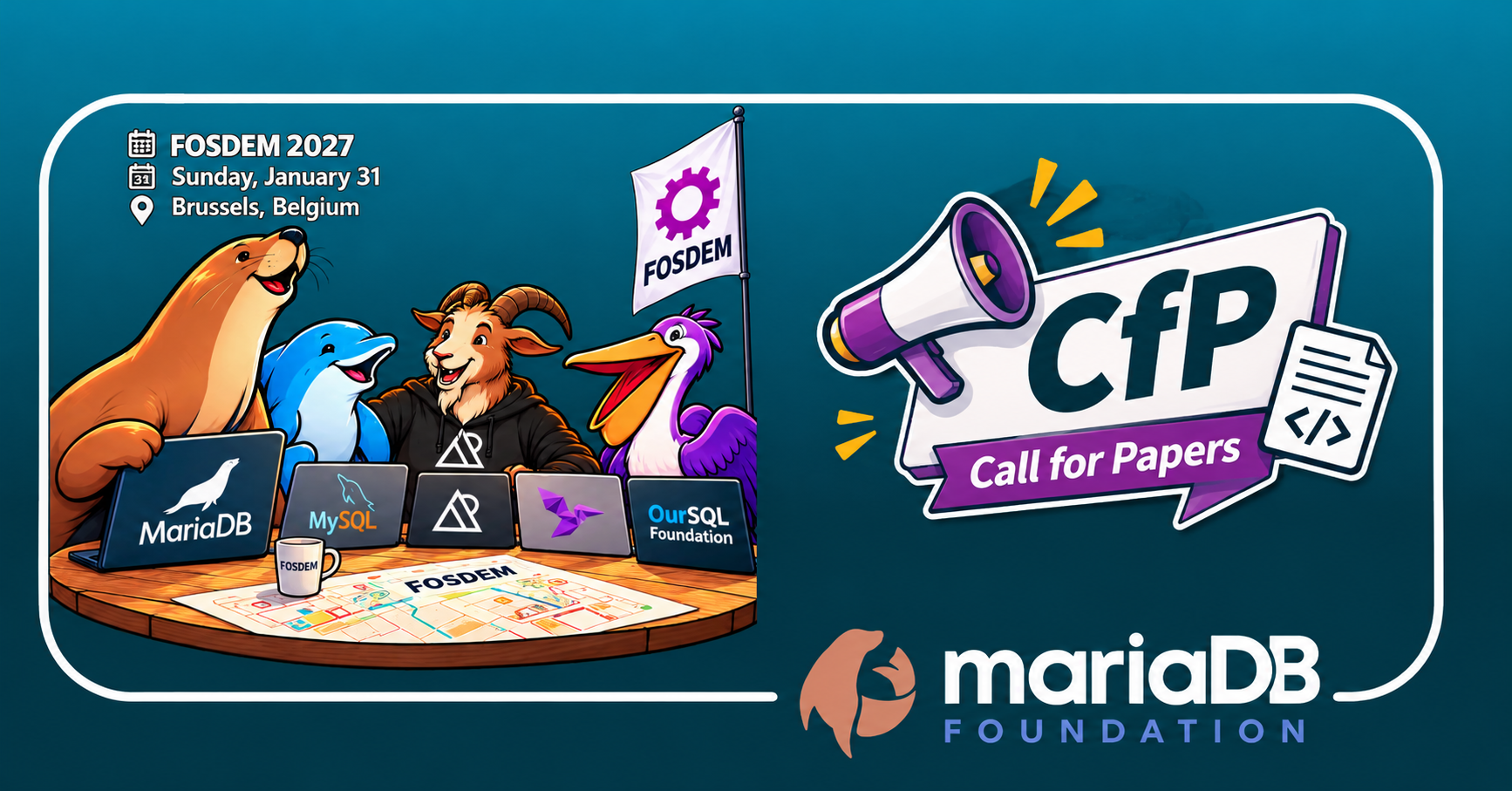
Different projects. Shared roots. One M-Ecosystem.
We are pleased to announce the Call for Participation (CfP) for the M-Ecosystem Devroom at FOSDEM 2027, taking place on Sunday, January 31, 2027, in Brussels, Belgium.
Following the tradition of the MariaDB, MySQL & Friends Devroom, we are opening a new chapter that brings together an even broader community of developers, contributors, maintainers, DBAs, and open-source enthusiasts.
Whether you’re working on MySQL, MariaDB, Percona Server, VillageSQL, AliSQL, or any of the tools, connectors, […]
-
MariaDB Foundation TAF: Profiling MariaDB Subsystems Across Hardware Using Targeted Performance Profiles
MariaDB has a lot of moving parts. Binlog durability, isolation levels, thread scheduling, Performance Schema instrumentation, InnoDB safety mechanisms, charset handling, SSL, logging — each subsystem has its own cost, and that cost changes depending on the hardware underneath it.
Last week we built a structured set of performance profiles to measure those costs directly. The goal wasn’t to tune MariaDB. The goal was to isolate each subsystem and quantify its impact on throughput across different machines.
These profiling configurations […]
-
Giving the Optimizer a Hint: What’s New in MariaDB Server 13.0, compatibility and beyond
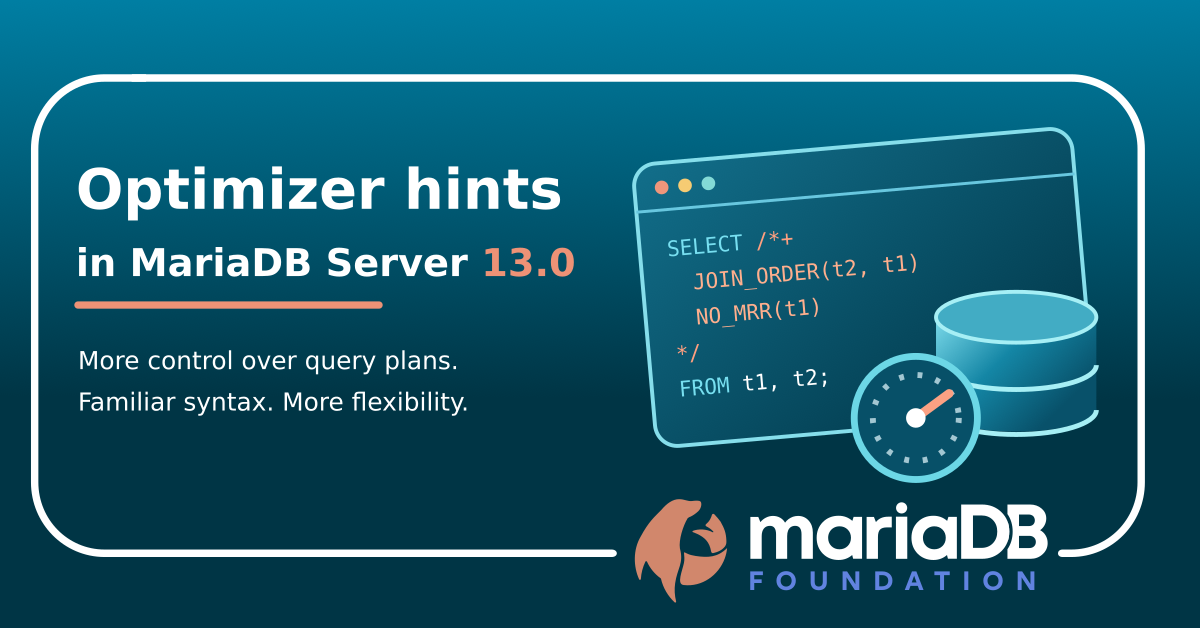
The optimizer is one of the most important components of a database server. Most of the time, we trust it to make the right decisions. But sometimes, we know something about our data or workload that the optimizer doesn’t, and we’d like to give it a little help.
With MariaDB Server 13.0, we’re making that easier than ever!
This release introduces a comprehensive set of optimizer hints, using a syntax familiar to MySQL users and supported by other projects in […]
-
Deploying MariaDB and WordPress on Kamatera
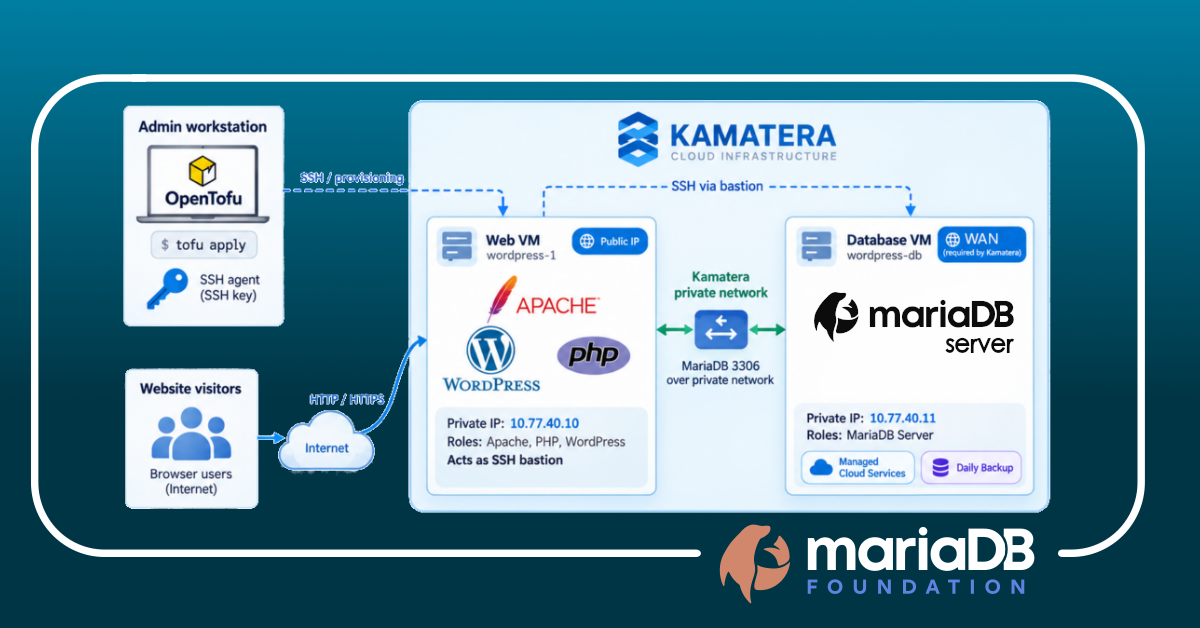
When deploying MariaDB in the cloud, controlling the infrastructure can be as important as controlling the database itself.
Plenty of cloud providers offer their own approaches to virtual machines, networking, storage, and managed services. One of them is Kamatera, a global cloud infrastructure provider that recently joined the MariaDB Foundation as a Silver Sponsor.
Kamatera (see in ecohub) offers customizable cloud servers across more than 20 data center locations worldwide. Instead of choosing from a limited set of predefined VM […]
-
luroConnect joins MariaDB Foundation as a Silver Sponsor

MariaDB Foundation is pleased to welcome luroConnect as a Silver Sponsor, bringing practical experience in running MariaDB for Magento and Adobe Commerce merchants to our sponsor community.
luroConnect provides managed cloud hosting for eCommerce, with 24/7 application-aware support, deployed into customers’ own AWS or GCP accounts. Its team runs MariaDB in production for eCommerce stores and works with merchants and agencies on deployments, performance, migrations and ongoing operations, with particular expertise in Magento and Adobe Commerce.
For online stores, database […]
-
The MariaDB Plugin API has Doxygen Documentation Now!
Developing plugins is one of the ways we really encourage to extend MariaDB Server’s capabilities. However, understanding the available APIs has often required developers to explore header files, source code, and existing plugin implementations.To make this easier, we now have a new, Doxygen-generated MariaDB Server Plugin API reference, available directly in the MariaDB documentation.If you’ve been following recent commits to the MariaDB Server repository, you may already have noticed some of the work behind this initiative. I’d like to present […]
-
MariaDB Foundation Newsletter – 1 November 2026
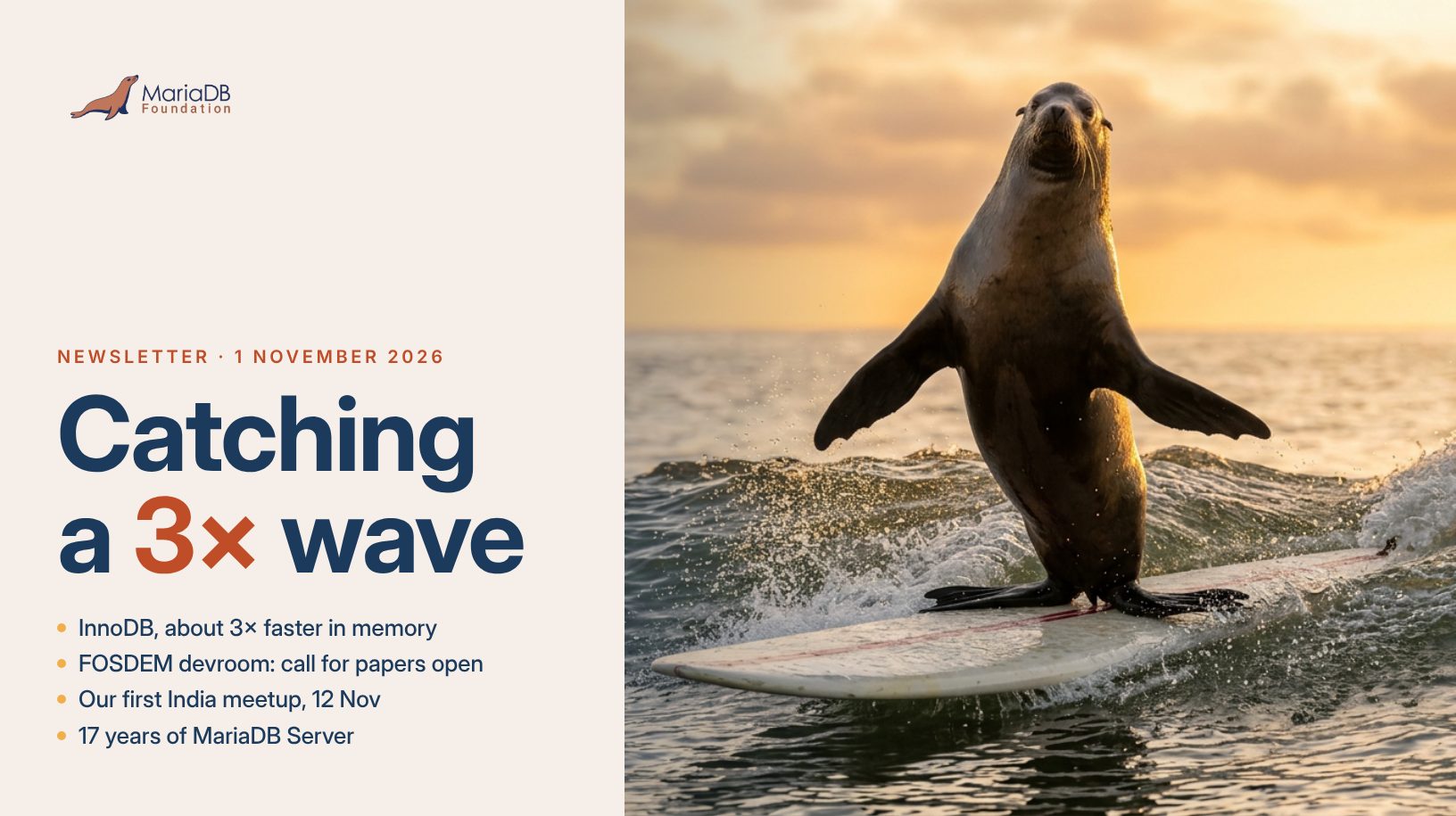
InnoDB about 3x faster on in-memory workloads, the FOSDEM 2027 M-ecosystem devroom call for papers, parallel query execution, our first India meetup and 17 years of MariaDB Server.
-
What MariaDB’s plugin API can carry: the HyperLogLog case
Can a complete analytic feature live outside the MariaDB server core? By “complete” I mean a column type, aggregates that build its values, and scalar functions that read them. I built the type_hll plugin, which adds HyperLogLog sketches to MariaDB, and I use it here to answer that question.
The answer is mostly yes. One shared library, type_hll.so, registers the HLL data type and eight functions. You enable all of it with one statement:
The “mostly” is important. The HLL […]